Gates of Sattva
He Crossed an Ocean Looking for Solid Ground
Every traveller carries two journeys.
The one on the map. And the one no map has ever charted.
He had studied the map carefully. A new country. A new currency. Streets that were clean and systems that worked and opportunities that waited, patient and abundant, for those willing to reach for them. He had heard the stories. He had believed them. And belief, when it is strong enough, has a way of rearranging reality — at least for a while.
This is what the wise call a placebo.
And placebos, by their very nature, eventually wear off.
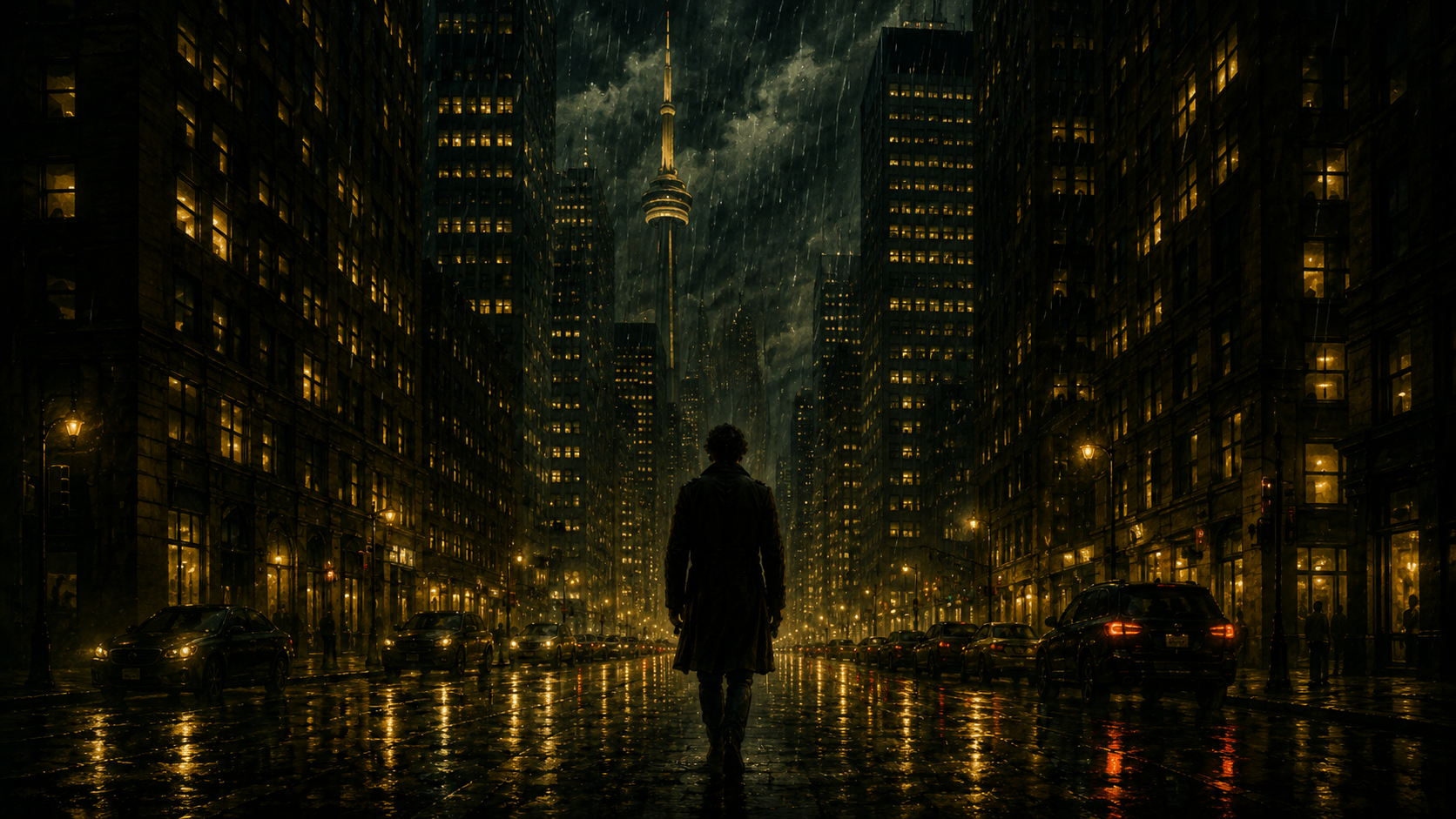
Toronto received him the way great cities receive all dreamers — with indifference.
Not cruelty. Cities are not cruel. They simply do not notice you. They were here before you arrived. They will be here long after you leave. The dreamer who mistakes a city's grandeur for a personal invitation will always, eventually, find himself standing alone on a busy street, surrounded by thousands of people, wondering why he feels so completely unseen.
He took a job in retail.
The ocean had been his dominion. The bridge his throne. Now there were shelves to stock and floors to sweep and a body — already carrying the quiet damage of surgeries and sleepless nights at sea — being asked to lift and carry and bend and smile.
The body remembers everything.
It remembered the ship. The horizon. The clean salt air and the particular dignity of a man who knew his purpose. And every morning, as he lifted boxes that were never meant for hands like his, the body filed another quiet grievance.
He did not listen. He could not afford to.
There is something the ancient healers of India understood long before modern medicine had the language for it. When a person is uprooted — truly uprooted, pulled from the soil of everything familiar and replanted in foreign ground — the body does not simply adjust. It grieves. The rhythms that once governed sleep, digestion, breath and energy become disordered. Not from weakness. From displacement. Ayurvedic wisdom has recognised this pattern for over five thousand years — the scattered mind, the restless body, the nervous system running perpetually on alert. It is not a flaw in the person. It is the cost of crossing oceans without tools to stay grounded.
He had no such tools yet. Nobody had given them to him. And so the body continued its quiet, accumulating protest — unheard, unaddressed, growing louder with every passing season.
Then came the accident.
The universe, when it wishes to teach a lesson that has gone unlearned, does not whisper a third time.
In a single moment — the kind of ordinary moment that precedes extraordinary loss — everything shifted. The financial ground beneath him cracked open. The future he had been carefully, painfully rebuilding disappeared like a ship swallowed by fog.
He stood in the wreckage of it alone.
Not entirely alone. His wife was there. Carrying their child within her, that impossible miracle of new life blooming inside a season of complete collapse. But loneliness is not always the absence of people. Sometimes it is the presence of a weight too heavy to share. He looked at her and loved her and said nothing of the enormity of what he was carrying.
Because what was there to say?
I crossed an ocean. I believed. And the ocean was simply waiting on the other side, wearing different clothes.
The ancient texts speak of something called Ojas — the vital essence that sustains a human life. Not energy in the way the modern world understands energy. Something deeper. The luminous reserve that keeps the eyes bright, the mind clear, the spirit resilient. It is built slowly, through rest and nourishment and peace. And it is spent — quickly, silently, invisibly — through grief, through sleeplessness, through years of carrying what was never meant to be carried alone.
His Ojas had been draining for years. He simply had no name for what was leaving him.
There is a thought that visits every man when he has lost enough.
Not a dark thought. Simply an honest one.
Perhaps the problem is not the place. Perhaps the problem has been travelling with me all along.
He was not ready to receive that thought yet. The wound was too fresh. The loss too loud. But the thought, patient as all true things are, simply waited.
It knew he would return to it.
When the noise finally stopped.
When the body — tired of being ignored — finally made enough noise of its own.
That time was coming.
He did not know it yet.
The ancient teachers say that a man who has lost his ground must first stop running before he can find it again. He had not yet stopped running. There were still more roads to exhaust. More wrong doors to open. More lessons the hard way.
Continue the Series →
The Year the City Asked Everything and He Had Nothing Left to Give